Having a reliable mobile connection is key for navigating Switzerland, looking up train schedules, and staying in touch. This article covers the different SIM card options available for tourists, helping you compare providers and pick a data plan that works for your trip.

Switzerland Travel SIM Cards
Switzerland travel SIM cards are designed for international visitors and provide mobile data access without a long-term contract. These SIMs usually include:
Options for data-only plans or data with local calls and texts
Short-term validity, typically ranging from 7 to 30 days
Fast activation with most devices working shortly after setup
Support services available in English and other languages
Before picking a SIM card, consider your data usage, the length of your stay, and your budget. Swiss providers offer various plans, from 500 MB packages to unlimited daily or monthly options.
Make sure your phone is unlocked and supports the network bands used in Switzerland. Local carriers primarily use 4G LTE bands such as B1, B3, B7, B8, B20, B28, and B38. For 5G services, the common bands are n1, n28, n78, and n80. [1]
For travelers who prefer not to use a physical card, an eSIM is a practical alternative. You can also check our eSIM Switzerland page or read our guides on the best eSIM for Switzerland and roaming in Switzerland to see all your options.
Prepaid SIM Cards for Switzerland
Prepaid SIM cards are a practical choice for international visitors traveling to Switzerland. These pay-as-you-go plans allow you to buy mobile service in advance, with a fixed amount of data, calls, and texts that lasts for a set number of days. They are useful for travelers who want to control costs and avoid roaming fees.
Most major Swiss mobile providers and international SIM companies offer prepaid options. These plans do not require contracts or long-term commitments. You can buy them online before your trip or in stores after you arrive. Many are available as both physical SIM cards and eSIMs, making them compatible with various devices.
Switzerland Mobile Data Plans for Tourists
Mobile data plans in Switzerland are designed for both short-term visitors and those staying for several weeks. Depending on how long you are in the country, you can choose a plan that matches your expected data use and travel style.
If you are visiting for a short time, a 7-day plan with a few gigabytes or unlimited access is usually enough for navigation and messaging. For longer stays, 15 to 30-day plans with larger data allowances are available. Some providers also include unlimited local calls. When choosing a plan, consider your daily data needs and how often you will use hotel Wi-Fi to save mobile data.
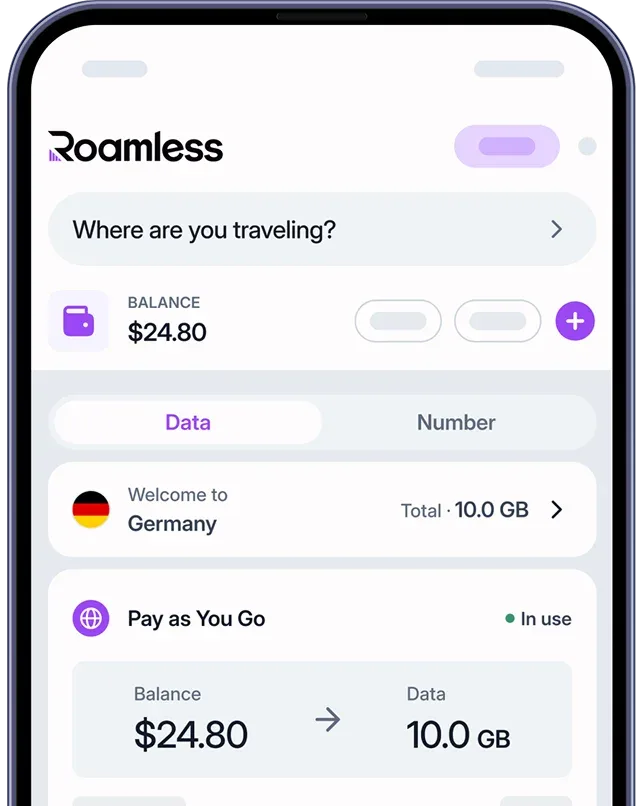
While physical SIM cards have been widely used by international tourists in Switzerland, a Global eSIM like Roamless offers a new and convenient way to get connected without visiting a store. eSIMs come with several advantages that make them easier to use than traditional SIM cards:
Activate before arrival: Set up your eSIM at home and get online as soon as you land in Switzerland.
No need to visit a store: Avoid airport kiosks and retail shops by using a digital setup.
Flexible plan options: Switch between plans from your phone, which is helpful if you also visit neighboring countries in the EU.
Keep your SIM slot free: Leave your original SIM in place and still use Swiss mobile data.
Reduce waste: eSIMs eliminate plastic, making them a more eco-friendly choice.
Use the latest tech: eSIMs are supported by most newer smartphones and are becoming a common standard.
Using a travel eSIM means you are connected quickly after arriving. You do not need to search for vendors or read through complex contract terms. You can use maps and messaging apps from the moment you arrive. For tourists who want reliable mobile data, eSIMs provide a simple solution.
For detailed information about eSIMs, you can read our post on What is eSIM and how does it work to understand the basics.
Best SIM Cards for Switzerland Travel
If you are traveling to Switzerland, staying connected is essential for navigating the mountain trains, communication, and online access. Prepaid SIM cards are a popular choice for international visitors who want reliable mobile service without long-term contracts or unexpected fees. Whether you prefer a physical SIM or an eSIM, many providers offer flexible plans that cover short visits or longer stays. To help you compare your options, here is a quick look at some of the best prepaid SIM and eSIM providers for tourists visiting Switzerland.
Provider | Data & Calling | Key Features | Convenience |
Swisscom | Unlimited data, calls, and SMS options | Excellent nationwide coverage; 5G support included; specialized tourist plans available | Easy to find at airports and train stations; reliable customer support |
Sunrise | Daily flat rates for unlimited data and calls | Strong network quality; supports both physical SIM and eSIM; 4G+ and 5G speeds | Available in many retail shops; simple "pay-as-you-go" daily structure |
Salt | Low-cost daily data packs or fixed data amounts | Affordable daily rates for data; good for short trips; compatible with most devices | Widely available in supermarkets and authorized stores |
Lyca Mobile | Budget-friendly bundles with high data limits | Uses reliable networks; includes 5G access; competitive international calling options | Order online or buy at many convenience stores; affordable for long stays |
Roamless (eSIM) | Pay-as-you-go data; no expiry; calls via app | eSIM only; works in many countries; set up before your trip begins | No physical SIM card needed; install and activate through the app instantly |
Each provider offers different plan types, so the best choice depends on your phone, trip length, and data needs. Roamless may suit those who want an eSIM set up in advance, while providers like Swisscom, Sunrise, and Salt offer physical SIM options with wide local coverage. Compare the plans to see which one fits your travel plans best.
Switzerland SIM Cards: What to consider
When choosing a SIM card for your trip to Switzerland, it helps to consider a few key points:
Data allowance: Plans range from small daily bundles to large monthly packages or even unlimited data.
Validity period: Most tourist options are designed for 7, 15, or 30 days of use.
Network coverage: Service is provided through the three main networks: Swisscom, Sunrise, and Salt.
Extra features: Some plans include unlimited local calls, while others focus only on high-speed data.
Pricing: Costs depend on the provider and plan size, often starting around 10 CHF to 20 CHF for basic prepaid options.
For example, a prepaid daily flat rate for unlimited data in Switzerland might cost around 2 CHF per day, while fixed monthly packages can range from 20 CHF to 50 CHF. Some unlimited plans may reduce your connection speed after you reach a specific data limit, so it is a good idea to check the details of your chosen plan.
While physical SIM cards are widely available, eSIMs like Roamless offer more flexibility for travelers:
You can activate your plan before arriving in Switzerland
There is no need to visit a store or wait in line at the airport
You can switch between data plans directly from your device
Your phone's SIM slot remains available for other uses
eSIMs help reduce plastic waste
Most modern smartphones support eSIM technology
Roamless makes it easy to stay connected as soon as you land. Instead of searching for SIM cards or dealing with unfamiliar paperwork, you can access maps, train schedules, and messaging tools immediately. For many travelers, eSIM is a convenient and reliable choice for mobile data in Switzerland.
Switzerland SIM Card Costs
The cost of prepaid SIM cards in Switzerland depends on the amount of data, plan length, and provider. Here is a quick overview to help you estimate your mobile data expenses while traveling:
Provider | Plan Type | Data & Pricing | Ideal For |
Swisscom | Short-term (7 to 30 days) | Unlimited data for approx. 5 CHF per day or bundles from 20 CHF | Travelers needing strong coverage and 5G access |
Sunrise | Short-term (Daily) | Around 2.50 CHF per day for unlimited local data | Users who want a simple daily price without a long contract |
Salt | Short-term (Daily/Monthly) | Daily unlimited data for approx. 1.99 CHF or monthly packs from 10 CHF | Budget-conscious travelers staying for a few days or weeks |
Lyca Mobile | Long-term (30 days) | 5 GB to Unlimited data ranging from 15 CHF to 40 CHF | Visitors who need high data limits for a full month |
Roamless (eSIM) | Short to Long-term | Pay-as-you-go data from approx. $2.45 per GB; no expiry | eSIM users wanting a flexible setup before arrival |
Choosing the right plan based on your trip length and usage needs can help you stay connected across Switzerland without unnecessary costs.
How to Buy SIM Cards in Switzerland
Buying a SIM card in Switzerland is straightforward. Options include:
Pre-ordering online for home delivery or pickup at a designated point before your trip.
Buying at airport kiosks upon arrival (available at major airports like Zurich and Geneva).
Visiting retail stores and supermarkets like Migros, Coop, or mobile electronics shops in most cities.
Purchasing from official mobile carrier stores (Swisscom, Sunrise, and Salt) located in city centers and major train stations.
In Switzerland, you are required by law to show a valid ID or passport and provide some personal information when registering a prepaid SIM card. Also, make sure your phone is unlocked and supports local network bands to avoid connection issues.
While physical SIM cards are easy to find across the country, eSIMs offer a more convenient option. You can buy an eSIM online, activate it before your trip, and land in Switzerland with instant internet access. This helps you avoid waiting at kiosks and store visits, especially after a long journey.
eSIMs: A Digital Alternative to Physical SIMs
eSIMs are changing how travelers stay connected, offering several benefits over traditional physical SIM cards in Switzerland:
Instant activation: You can purchase and activate your plan before your trip, so you are online the moment you arrive.
Multiple profiles: Keep your primary number active while using a Swiss data plan simultaneously.
No physical swapping: Avoid the need to handle or store tiny SIM cards while moving between countries.
Environmental benefit: Reduce plastic waste by choosing a digital option instead of a physical card.
For travelers with eSIM-compatible devices, this technology provides a simple and flexible way to access mobile data without visiting a store or dealing with SIM card packaging.
SIM Card, Pocket WiFi, or eSIM for Switzerland?
If you are planning a trip to Switzerland, there are three main ways to stay connected: Pocket WiFi, physical SIM cards, and eSIMs. Each has its own pros and cons depending on your travel needs.
Pocket WiFi
Allows multiple devices to connect at the same time, which is useful for families or groups.
Offers stable internet access in most urban areas and mountain resorts.
Requires carrying an extra device and keeping it charged throughout the day.
May come with daily data limits or reduced speeds after a certain amount of usage.
SIM Cards
Work directly in your unlocked phone for local calls and mobile data.
Often a cost-effective option for longer trips or heavy data users.
Require manual installation and checking if your phone is compatible with Swiss networks.
Only work on one device at a time unless you use a personal hotspot.
eSIMs
Can be activated online before you arrive in Switzerland.
Support using more than one mobile plan on a single device simultaneously.
Only available on phones and tablets that support eSIM technology.
The right option depends on your device, how long you're staying, and how you plan to use mobile data. For solo travelers with newer phones, an eSIM is often the most flexible and easy choice. If you prefer a physical SIM card, there are many prepaid plans available across Switzerland that offer reliable coverage and a range of data options.
Will my phone work in Switzerland?
Yes, many smartphones that are unlocked and relatively new are fully compatible with mobile networks in Switzerland, especially those supporting 4G LTE and 5G. Before traveling, it's smart to check if your device is compatible with the frequency bands used by Swiss providers, such as B3 (1800 MHz), B7 (2600 MHz), and B20 (800 MHz) for 4G, and n78 for 5G. Choosing a local prepaid SIM or eSIM can lower your mobile costs and provide stable service during your stay. Whether you're navigating the streets of Zurich or exploring the Swiss Alps, these options will help you stay connected.
Switzerland SIM Card: Zurich Airport
Zurich Airport (ZRH) provides several accessible options for travelers who need a SIM card immediately after landing. Once you exit the arrivals hall, you can find official mobile carrier stores such as Swisscom, Sunrise, and Salt located in the Airport Center (Level 0 and 1). These shops offer prepaid tourist SIM cards with data packages typically valid for 7 to 30 days.
While purchasing at the airport is convenient, it can sometimes be busy, and you may need to wait in line to register your passport. These local SIM cards are plug-and-play, but the staff in the stores can help you with the activation and settings if needed.
A faster and often more affordable alternative is to set up a travel eSIM before you depart. By using an eSIM, you can simply activate your data plan via a QR code and stay connected from the moment your plane touches down in Zurich, avoiding the need to visit a physical shop.
You can also read our guide on Zurich Airport WiFi to learn how to get online while you're still at the terminal.
SIM Card for Zurich
Zurich’s fast-paced environment and central role in Switzerland require dependable mobile connectivity. When choosing a SIM card for your stay in Switzerland, consider the following:
Strong signal coverage across the entire city and surrounding lake areas
Fast data speeds for maps, train schedules, and social media updates
Easy access to SIM cards in city stores or online before arrival
Major carriers like Swisscom, Sunrise, and Salt offer excellent urban coverage. If you plan to spend time in neighborhoods like the Old Town, Zurich West, or near the lake, nearly all providers will work reliably. However, user reviews can help you find the best speeds in the exact areas you’ll explore.
For additional information, check out our eSIM Switzerland page.
Selecting the right SIM or eSIM ensures you stay connected throughout your trip. Whether you purchase a prepaid card at the airport or set up an eSIM before you arrive, choose the option that works best with your device and data requirements for reliable coverage.
Frequently Asked Questions
Where can I buy a SIM card in Switzerland?
You can purchase SIM cards at major airports, official carrier stores, train stations, and certain retail shops or supermarkets. Ordering online or choosing a Roamless eSIM can also save you time when you arrive.
Can I use an eSIM in Switzerland?
Yes, most modern smartphones support eSIM technology, and all three major Swiss carriers offer eSIM options for visitors. Using an eSIM allows you to set up your data plan before your trip and stay connected the moment you arrive.
How do I activate a Swiss SIM card or eSIM?
Activation is usually quick. For physical SIM cards, you insert the card and follow the provider's instructions, which include a mandatory ID registration. For eSIMs, you simply scan a QR code and follow the on-screen prompts on your device to get online.
Can you buy a SIM card without a plan in Switzerland?
You can buy a physical SIM card, but it will not provide data or calling services until you choose a prepaid plan or add credit. In Switzerland, you must also complete the legal registration process with your passport or ID before the card becomes active.
Do Swiss SIM cards have an expiry date?
Most prepaid SIM cards in Switzerland have an expiry period that depends on your last usage or top-up. Generally, if a SIM is not used for 12 to 24 months, the number may be deactivated, but specific policies vary by carrier. It is best to check the terms of your specific provider.
Sources:
[1] GSMArena. (n.d.). Network bands in Switzerland. GSMarena.com. https://www.gsmarena.com/network-bands.php3?sCountry=Switzerland