An eSIM allows users to connect to mobile networks without a physical SIM card. It is widely used by travelers, remote workers, and those who need flexible mobile data access. Because eSIM providers differ in coverage, pricing, and usage terms, selecting the right option requires careful evaluation.These points help users find an eSIM that aligns with their travel plans and data requirements.

What to Consider When Choosing an eSIM Provider?
Key factors to consider when choosing an eSIM provider include coverage, pricing, device compatibility, and customer support.
An eSIM allows users to connect to mobile networks without a physical SIM card. It is widely used by travelers, remote workers, and those who need flexible mobile data access. Because eSIM providers differ in coverage, pricing, and usage terms, selecting the right option requires careful evaluation.These points help users find an eSIM that aligns with their travel plans and data requirements.
1. Global Coverage
Global coverage defines where the eSIM can be used and how consistent the connection will be across locations.
Why it matters: Coverage affects whether the eSIM remains usable when moving between countries or regions.
Key considerations:
List of supported countries and regions
Differences between country-specific, regional, and global plans
Number of local network partners per destination
Possible coverage limitations in rural or less-developed areas
2. Data Plans and Pricing
eSIM plans vary in data size, duration, and pricing structure.
Why it matters: Choosing the wrong plan can lead to unused data or unexpected restrictions.
Key considerations:
Available data amounts and validity periods
Fixed data plans versus unlimited or daily-use plans
Speed limits after reaching a certain usage level
Clarity of pricing and included features
3. Network Speed and Reliability
Network performance depends on the quality of local network connections.
Why it matters: Stable connectivity is essential for everyday mobile use while traveling.
Key considerations:
Local mobile networks the eSIM connects to
Support for 4G and 5G where available
Differences in performance between urban and remote area
Consistency of connection across supported regions
4. Simple Activation and Use
An eSIM should be simple to install and manage without technical effort.
Why it matters: Complicated activation can delay access to mobile data when it is needed most.
Key considerations:
Installation via QR code or manual setup
Time required for activation
Steps required after installation to start using data
Ability to manage usage and settings easily
5. Compatibility with Devices
Not all devices support eSIM functionality in the same way.
Why it matters: Device incompatibility makes the eSIM unusable regardless of plan quality.
Key considerations:
Supported device brands and models
Operating system and software version requirements
Regional device restrictions
Limitations on using multiple eSIMs on one device
6. Customer Support
Customer support becomes important when technical or connectivity issues occur.
Why it matters: Access to assistance can reduce downtime and resolve issues faster.
Key considerations:
Available support channels such as chat or email
Response time expectations
Support availability across time zones
Access to help resources or documentation
7. User Reviews and Ratings
User feedback provides insight into real-world performance.
Why it matters: Reviews reflect actual experiences beyond product descriptions.
Key considerations:
Overall rating trends across platforms
Common issues mentioned by users
Feedback related to coverage, speed, or support
Consistency of positive or negative experiences
8. Security and Privacy
Mobile data usage involves the handling of personal information.
Why it matters: Proper data protection helps reduce security and privacy risks.
Key considerations:
Data encryption and protection measures
Privacy policy transparency
How user data is stored and processed
Compliance with data protection regulations
9. Flexibility in Switching Providers
Flexibility affects long-term usability and cost control.
Why it matters: Travel needs and usage patterns may change over time.
Key considerations:
Ability to replace or remove the eSIM easily
Restrictions on switching plans or providers
Contract or usage commitments
Reusability of the eSIM profile
10. Special Features and Add-ons
Some eSIMs include additional tools or optional features.
Why it matters: Extra features can improve usability but may not be necessary for all users.
Key considerations:
Data usage tracking tools
Plan customization options
Optional services included with the plan
Impact of add-ons on total cost
Why Roamless eSIM Stands Out
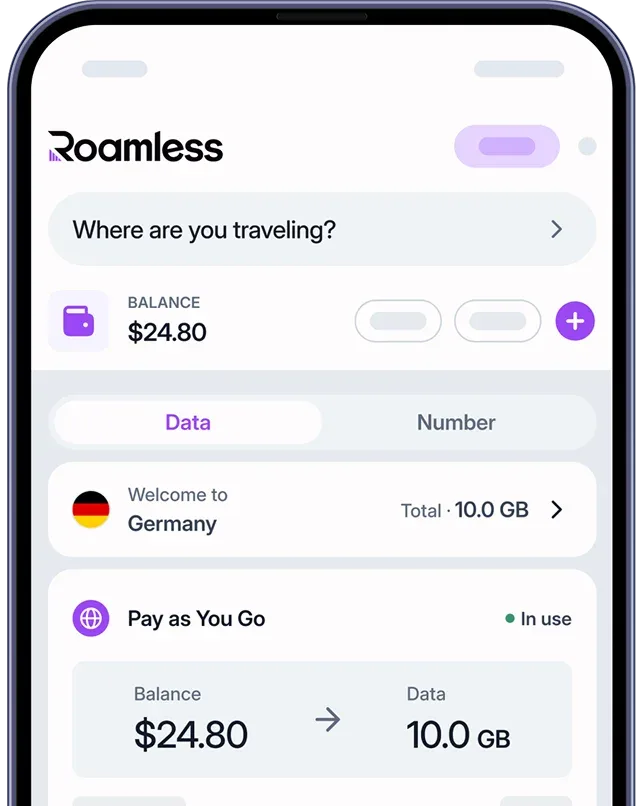
A global eSIM like Roamless helps travelers manage mobile data costs more effectively through a usage-based pricing model. Data can be used as needed without fixed expiration periods or frequent plan renewals, which supports budget-focused travel.
Pay-As-You-Go Data with No Expiration: Data does not expire, allowing travelers to use only what they need during a short stay and keep any unused balance for future trips.
Wide Coverage: Roamless works in over 200 destinations, making it suitable for trips that include one country or multiple locations.
Hotspot Support: Mobile data can be shared with other devices such as laptops or tablets when needed.
International Calling Option: Calls can be made through the app with clear per-minute pricing, providing an additional communication option alongside mobile data.
Automatic Network Switching: The eSIM connects to available local networks automatically, helping maintain stable service while traveling.
In addition, you can open the Roamless app and enter a valid promo code at checkout. To get the latest offers and extra data on your first purchase, visit our eSIM promo code page.
Choosing an eSIM provider requires evaluating factors such as coverage, pricing structure, network behavior, and usage flexibility. Different travel needs call for different solutions, and understanding how data is priced and managed can help avoid unnecessary costs. By comparing these factors, options like Roamless eSIM, which offer usage-based data and broad coverage, can be easier to assess against individual travel and data needs.
Frequently Asked Questions
What should I check first when choosing an eSIM provider?
Start by reviewing coverage for the countries you plan to visit, as availability and network quality can vary by location.
Does network performance depend on the eSIM provider?
Yes, network performance is influenced by the local networks the eSIM connects to in each country, which can affect speed and stability.
Will an eSIM work with all devices?
No, eSIM support depends on the device model, operating system, and sometimes the region where the device was purchased.
Can I use the same eSIM for multiple trips?
This depends on the provider. Some eSIMs expire after a fixed period, while others allow remaining data or balance to be used on future trips. Options like Roamless eSIM, which use a pay-as-you-go model without fixed expiration, can be more suitable for travelers who take multiple trips over time.